What role does the rotary airlock valve play in a spray dryer?
At the final stage of the drying process, the rotary airlock valve usually acts as the barrier between the spray dryer and the outside environment. Product flowing out of the 60–70 degree conical outlet falls by gravity into the rotary valve and is discharged from there. This seemingly simple step actually depends on a delicate balance; it can even affect the agglomeration inside the dryer. It may look like an ordinary rotary valve, but because it sits at the outlet of the system, its importance never diminishes. What the system expects from this equipment can be summarized as follows:
1- When operating under vacuum, the rotary valve must not draw in more air from the outside than necessary.
2- If there is pneumatic conveying below the dryer, it must not allow leakage air to escape upward, which would upset the internal balance and increase caking of the product.
3- For products with a high sugar content that change phase quickly, the design of the rotor and the inlet/outlet sections may need to change, and different coatings may be required.
4- It must be easy to dismantle for CIP cleaning, easy to maintain and washable.
5- Clearances must be selected to match the dryer's operating temperatures and parameters; otherwise the rotor may seize or rub against the housing as temperatures change.
More examples could be given, but these are the basic requirements for rotary valves operating below or at the outlet of a dryer. The rotary airlock valves we build for spray dryers include further details beyond those mentioned here. With years of accumulated experience, we have the equipment and know-how this demanding selection requires.
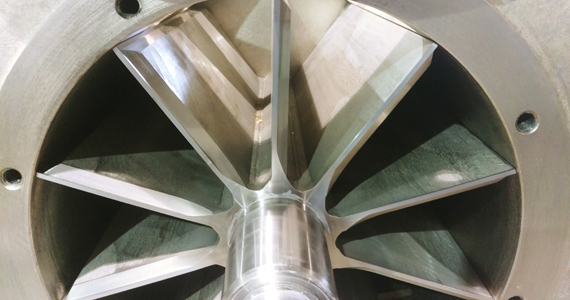
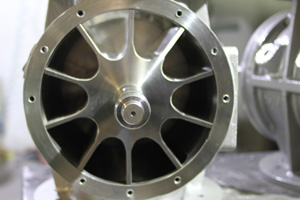
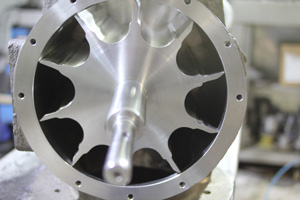
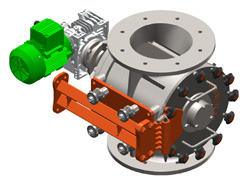
The images alongside and below show a special manhole added to a rotary airlock valve below a dryer to make cleaning easier. The process is washed down, especially when drying food products and products that cake easily (such as whey powder). Proper washing does not require removing the rotary airlock valve; once safety measures such as a position switch are in place, the operator can easily carry out drying, cleaning and inspection through the manhole. The vane design of a rotary valve operating below a drying tower depends on the type of powder flowing through it. As mentioned earlier, the main differences are clearance, vane type (radiused vanes) and the number of vanes on the rotor.
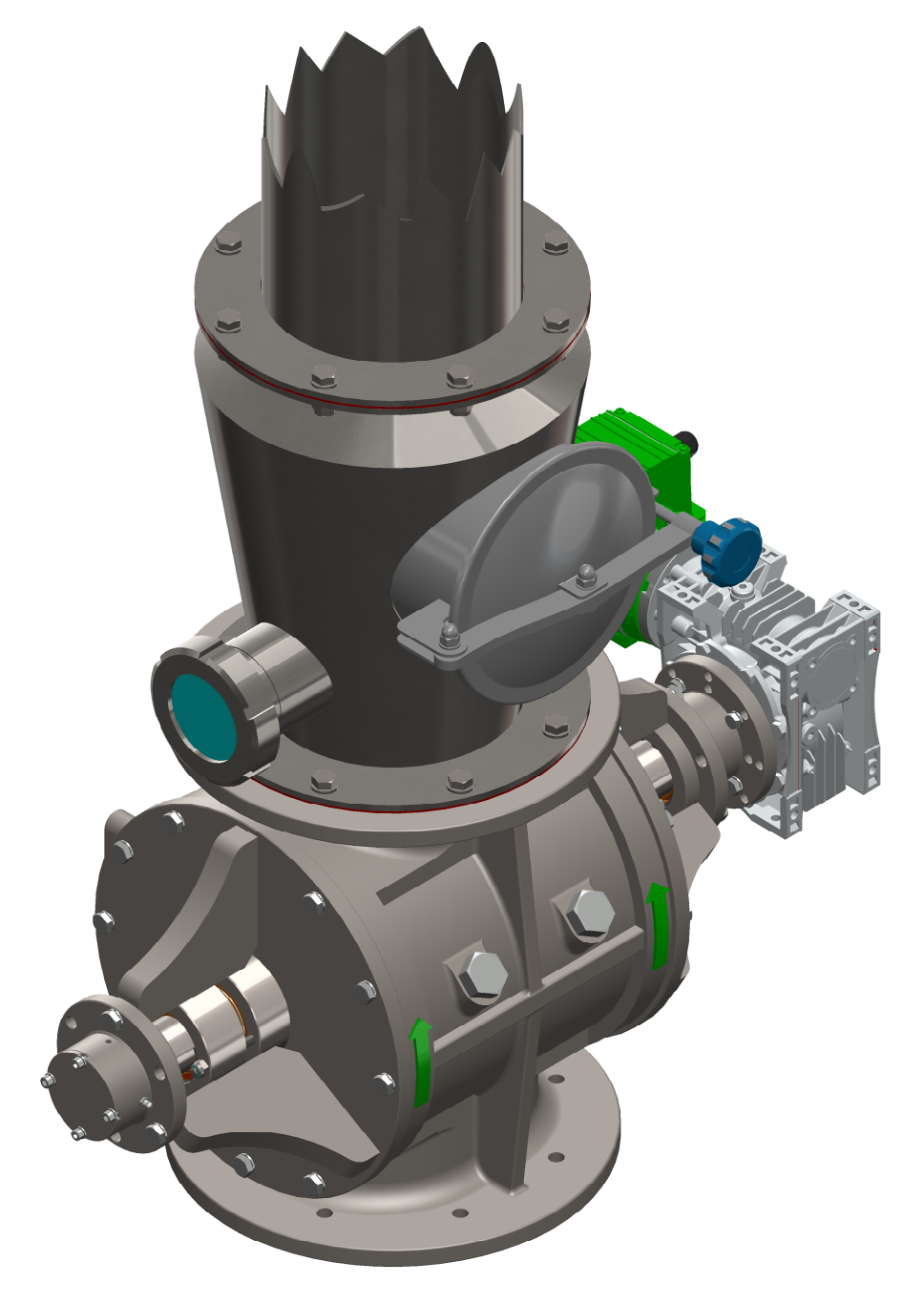
Rotor Types in Spray Dryer Rotary Airlock Valves
-


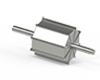
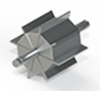
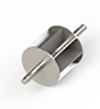
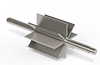
- Rotor options — A series (A1–A3): straight open-end vanes; B series (B1–B3): rounded pocket base for sticky products; C series (C1–C3): vanes with bolt-on, adjustable tip strips; D1: closed-end rotor with side discs for metering duty.
- The images below show two different applications: radiused vanes and vanes with angled tips. This example alone shows how many variants exist within a single process.
-
-
Spray dryer design and the rotary airlock valve
-

 Housing dimensions and flange details: rotary airlock catalogue (PDF)
Standard Product Range
Body diameters we build for this through-blown type: Ø220, Ø250 (long), Ø320 and Ø400 mm
Rotary airlock valves designed for drying processes

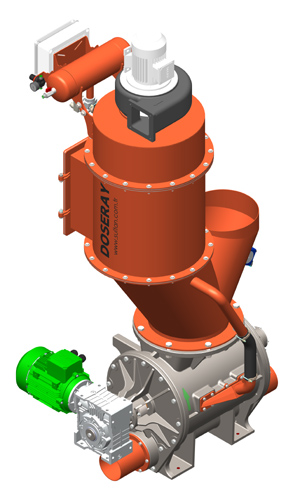
Rotary airlock valves and blow-through rotary valves for conveying at the dryer outlet
Every size of our rotary airlock valve range can be built with the optional features you require.
In addition, if there is a conveying system below the dryer, the seals must be selected specifically for the product; this is what sets spray dryer rotary airlock valves apart from standard models. Temperature is another factor: metal expands as it heats up, so clearance becomes especially important in dryers operating at high temperatures. High-sugar raw materials such as milk powder, whey powder and fruit extracts top the list in this respect.
LEARN MORE